
Choosing a marketplace in 2026 feels a bit like choosing a storefront in Bangkok. One street is packed and loud, one is part stage and part shop, and one feels like a cleaner mall with better display windows. For teams comparing Thailand ecommerce marketplaces, the smartest choice depends on how your brand wins, not which app has the biggest headline.
Thailand's mobile-first consumers rarely stay in one lane. They may discover a product in a TikTok live, compare prices on Shopee Thailand, then buy from an official store on Lazada Thailand. So the real question isn't who wins overall. It's where your brand can grow without burning margin.
Across Southeast Asia, Shopee still leads by scale, while TikTok Shop keeps closing the gap through content-led commerce. A recent regional market share analysis for Southeast Asia captures that broader trend. Thailand follows it, but with a stronger social commerce twist. Live selling, creator proof, and short-form discovery play a bigger role here than in many neighboring markets.
Thailand's ecommerce market is projected to approach 1.2 trillion baht by the end of 2026, fueled by rising Internet penetration. Yet exact March 2026 GMV splits inside Thailand aren't fully public. The directional signal is still clear. Shopee Thailand remains the broad-volume engine, the fast mover is gaining ground, and Lazada Thailand stays relevant where shoppers want official stores and a more polished buying experience.

Thailand also has its own consumer behavior. Local language, chat speed, bundle design, and creator tone matter more than many regional teams expect. A store that works well in another regional market can feel flat in Thailand if it lacks Thai-first content or live-selling energy.
Meanwhile, Thai shoppers move from content to checkout with very little friction. That habit shortens the gap between discovery and purchase. As a result, live selling carries more weight here than it does in many Western markets.
Another local reality is messy attribution and cash on delivery. A shopper may see your product on TikTok, price-check on Shopee Thailand, and return later through Lazada Thailand or LINE Shopping. As a result, last-click reporting can hide where demand actually started.
The best marketplace plan in Thailand is usually a job split, not a winner-takes-all bet.
Shopee Thailand works like the busiest department store during a sale weekend. People arrive with intent. They search, compare, stack vouchers, and buy. That makes it strong for household demand, replenishment products, flash sales, the 11.11 shopping festival, and brands that need a dependable volume base.
TikTok Shop plays a different game. It creates demand before search begins. A good hook, creator demo, or live session can move stock quickly, especially in beauty, fashion and apparel, personal care, and trend-led categories. In Thailand, that matters because shopping and entertainment already sit close together on one screen.
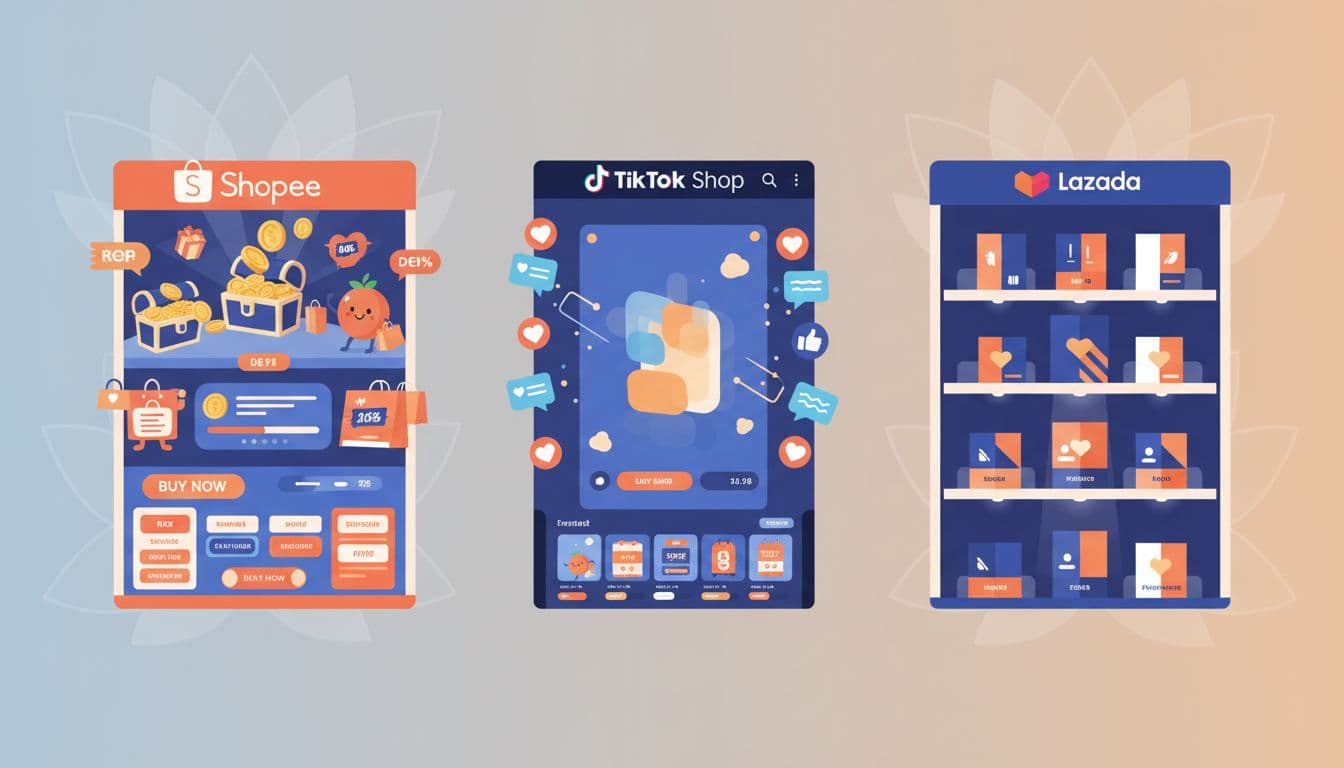
Lazada Thailand is quieter, but that can help. It often suits official stores, electronics, home, gifting, and categories where trust and presentation matter. If Shopee feels like a sale hall, Lazada Thailand often feels more like a branded counter inside a mall.
Operationally, each of these online shopping platforms rewards a different muscle. Shopee rewards catalog control, pricing ladders, campaign readiness, and strong review volume. TikTok Shop rewards hosts, hooks, bundles, sampling, and fast creative testing. Lazada rewards clean store design, richer product pages, and stronger service signals. Recent Thailand ecommerce marketplaces comparisons show these roles clearly, even if exact numbers shift by category.
Here's the quick read:
| Platform | Best use in Thailand | Main strength | Main pressure point |
|---|---|---|---|
| TikTok Shop | Discovery, live selling, creator commerce | Turns content into sales fast | Needs constant content and sharp promo planning |
| Shopee | Scale, search-led demand, campaign volume | Strong reach and mature buying behavior | Heavy price competition and promo dependence |
| Lazada | Official stores, premium categories, brand trust | Better fit for branded presentation | Often lower traffic in mass categories |
Fee stacks need care. Headline commission rarely tells the whole story. Platform fees, digital payments fees such as PromptPay and QR code payments, campaign costs, shipping support, affiliate payouts, and ads all change the net picture. That's why brands should verify current seller policies before committing.
One more caution, don't copy a regional playbook into Thailand unchanged. In some markets, a polished catalog can do more of the work. In Thailand, for buying and selling online, stores often need more local proof, faster chat, stronger bundles, and sharper campaign timing around 6.6, 9.9, 11.11, and payday windows.
For new brands not yet established in Thailand, cross-border ecommerce offers a solid alternative, but TikTok Shop is often the best first move if you already have creators, short-form video, or a founder who can sell on camera. It can create first demand fast. On the other hand, if your content engine is thin, Shopee is usually the safer launch base because shoppers already arrive with buying intent.
For scale, Shopee Thailand leads in B2C ecommerce. Its traffic depth, campaign culture, shopper habit, and robust logistics infrastructure including efficient last-mile delivery and express parcel delivery make it easier to push volume across more categories. Many Thailand teams treat Shopee as the revenue floor, then use TikTok Shop as the growth spike.
Category fit also changes the answer. Beauty drops, fashion capsules, and snack launches often pop on TikTok Shop because urgency and demo matter. FMCG replenishment can lean Shopee because habit wins. Electronics, home appliances, and giftable premium sets often have more room on Lazada Thailand, where official-store cues can calm buyer hesitation. For historical context, other global marketplaces like JD Central or local platforms like Kaidee have been options in Southeast Asia.

For live selling, TikTok Shop is the clear pick. Its native behavior fits host-led selling, impulse bundles, and creator proof. Brands that don't have in-house firepower often work with social commerce experts in Thailand to align creators, paid media, and store operations.
For margin protection, Lazada deserves more attention. If your category depends on trust, warranty, official-store status, or curated bundles, Lazada can protect brand value better than a constant price war. Digital payments like TrueMoney enhance checkout flow and support margin protection. Local reporting on March 2026 fee changes is also a reminder that platform economics can shift fast, so margin planning should happen at SKU level, not by gut feel.
A simple starting map looks like this:
| Business goal | Best first pick | Why |
|---|---|---|
| New brand launch | TikTok Shop | Fast demand creation through content and creators |
| Fast scale | Shopee | Broad reach and stronger conversion intent |
| Live selling program | TikTok Shop | Best fit for live-native shopping behavior |
| Protect margin and brand feel | Lazada | Stronger official-store and premium-store logic |
Most Thailand brands won't stick to just one of the Thailand ecommerce marketplaces forever. Shopee Thailand captures demand, TikTok Shop creates it, and Lazada Thailand supports trust in the right categories. Verify the latest fees and policies, then decide based on content strength, unit economics including e-wallets, and category fit. When those three line up, the platform choice for buying and selling online on online shopping platforms stops feeling like a guess.


