
A new LINE friend is warm for minutes, not weeks. If your brand waits too long, that attention fades into the background noise of chats, promos, and unopened tabs.
In Thailand, that delay costs real revenue. Current 2026 reporting from LY Corporation and market trackers shows LINE still sits at the center of daily digital behavior, with roughly 54 to 56 million users in the country. For ecommerce brands, a strong LINE welcome flow is where new attention turns into first-party data, first orders, and repeat demand.
The brands that win don't write one polite greeting and hope for the best. They build a short, sharp sequence with clear exits, smart segments, and tight measurement.
Thailand's ecommerce market is still growing fast, but the shape of growth has changed. Social commerce and chat-led buying now sit much closer to the point of purchase. A recent Bangkok Post report on chat commerce growth on LINE noted the rise of chat sales and the scale of LINE Official Accounts across the market. At the same time, Digital in Asia's Thailand market overview describes a buyer journey where discovery, trust, and conversion often happen inside platforms, not after a long trip to a website.
That changes the role of the welcome flow. It isn't a courtesy note. It is the first sales path.
A Thai shopper who adds your LINE OA from a TikTok video, a package insert, or an in-store QR code is giving you a live opening. They want a deal, product help, store details, order support, or proof that your brand is worth their time. If your first message gives them none of that, they drift.
A good welcome flow does one thing well first: it helps a new friend take the easiest useful next step.
That next step might be "shop now," but it might also be "pick a category," "claim a first-order offer," or "find the nearest branch." The right move depends on source and intent.
This is also where LINE beats slower channels. Email can carry more detail. LINE carries more urgency. Brands already investing in social content for Thai ecommerce should treat LINE as the bridge between discovery and purchase, not as a side inbox for generic promotions.
Most weak welcome flows fail before the first word. The problem is usually structure, not messaging.
Start with the trigger. "Added as friend" is the base trigger, but it should not be your only one. A better setup tracks where the user came from and what they did next. If the same coupon goes to everyone, you lose margin and relevance at the same time.
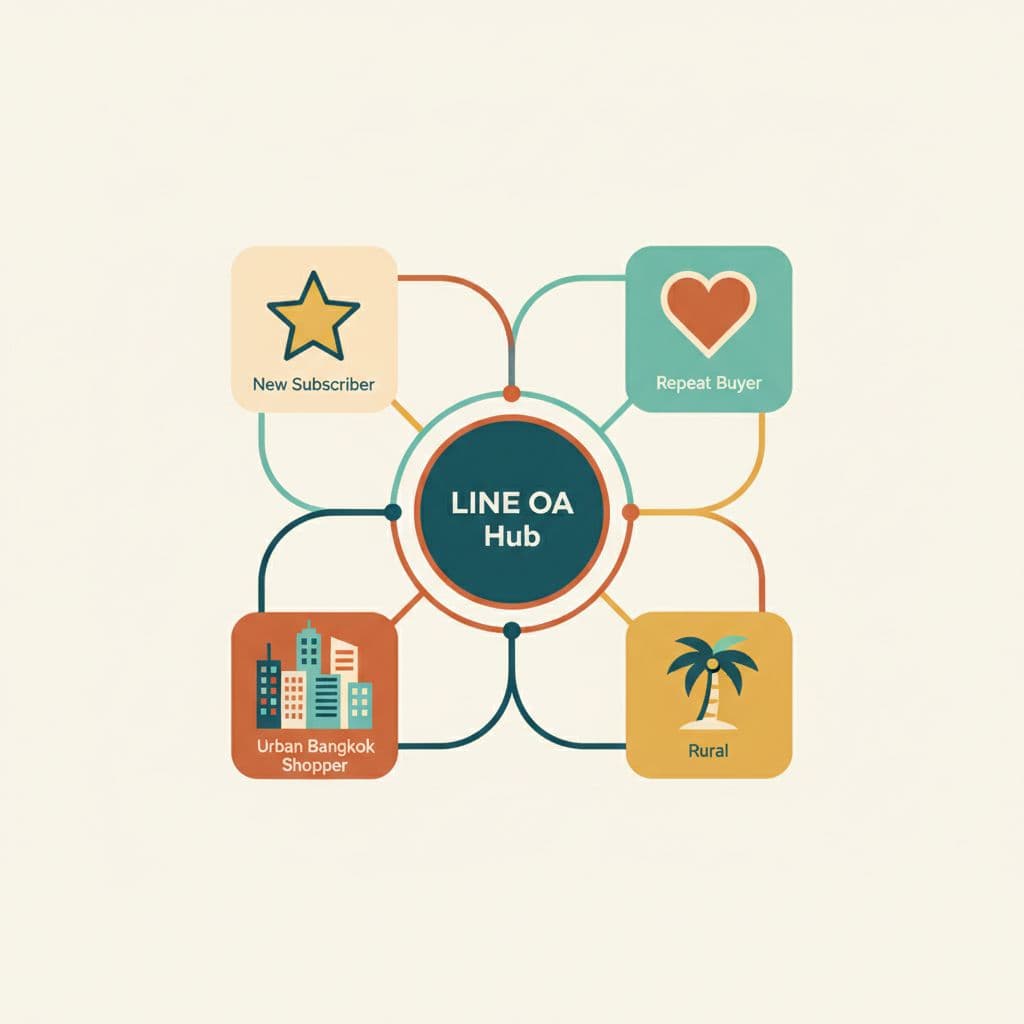
At minimum, capture four signals when possible:
For Thailand ecommerce, source matters a lot. Someone adding LINE from a retail shelf tag often needs stock, color, or branch info. Someone coming from a beauty creator's review may want proof, shades, and a starter offer. A buyer who adds LINE after checkout doesn't need a first-purchase coupon. They need post-order confidence.
If your stack is still simple, don't wait for perfect CRM integration. Use basic tags inside LINE OA and pass source names into your links. Later, connect those tags to your ecommerce platform and loyalty data.
Segmentation should stay practical. Start with three branches if you need speed: new prospect, recent buyer, and offline shopper. That's enough to stop the most obvious message mistakes.
The best LINE welcome flow feels more like a guided path than a speech. Each message should have one job, one CTA, and one reason to exist.
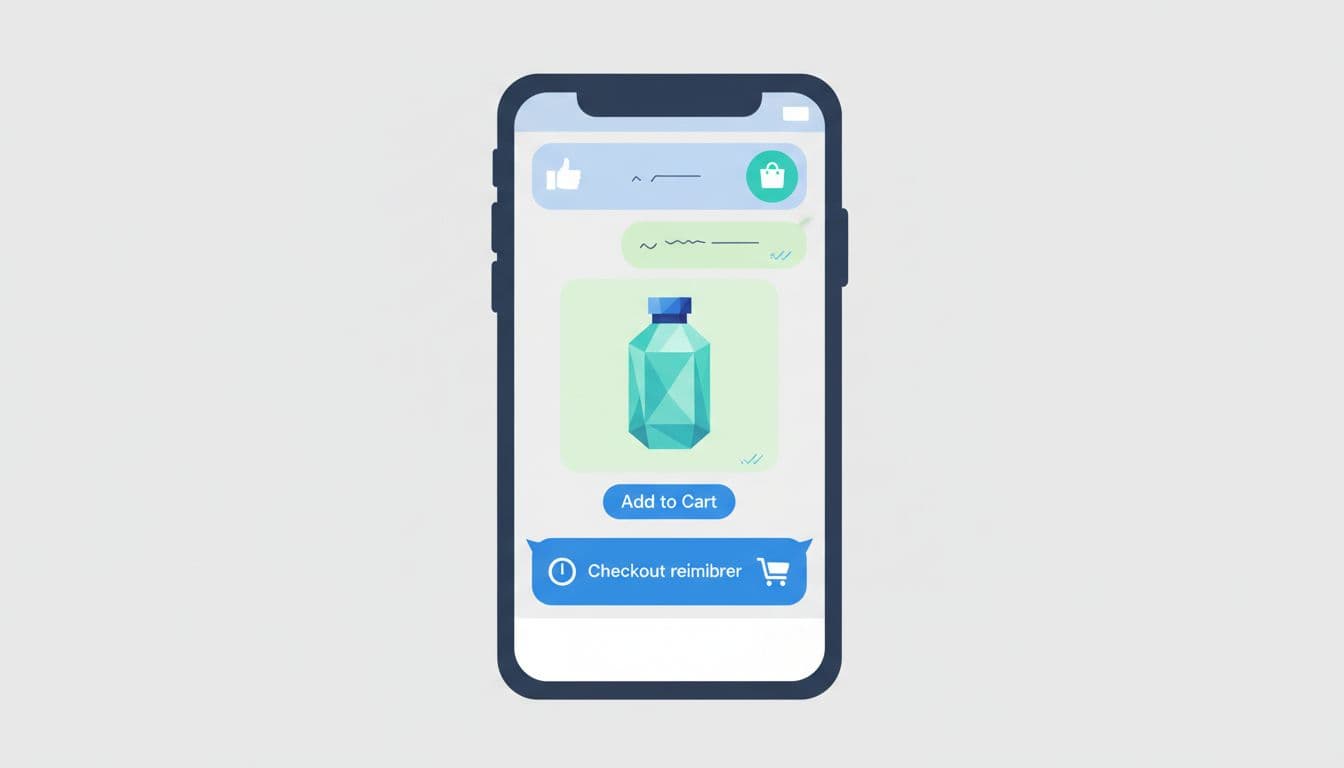
Use the native tools well. The official LINE OA tutorials cover greeting messages, rich menus, auto-replies, and step messages. Those features are enough for a strong first version if your logic is sound.
Here is a simple sequence that works for many ecommerce brands.
| Timing | Message goal | Best format | Exit rule || | | | || Immediate | Welcome, set expectation, offer first action | Short text + rich menu | Exit if purchase happens || 24 hours | Help selection, reduce doubt | Rich message with 1 category CTA | Exit if category clicked || 72 hours | Push first conversion | Offer, bundle, or free shipping reminder | Exit if coupon used || Day 5 or 6 | Add proof or utility | Reviews, how-to, bestseller list | Exit if purchase happens || Day 10 | Last nudge, then stop | Reminder with expiry or benefit | Stop if inactive |
The first message should answer three things fast: who you are, what the user gets, and where to tap next. Keep it short. Avoid a wall of copy, stacked emojis, or five buttons fighting for attention.
The second message should remove friction, not repeat the greeting. If you sell skincare, send a category choice like acne, hydration, or brightening. If you sell fashion, guide by fit, size, or bestsellers. If you sell home goods, lead with use cases, not a giant catalog.
By the third message, you can ask for the sale. A first-order offer still works in Thailand, but frame it with guardrails. Free shipping above a threshold often protects margin better than a flat discount. For some brands, a small bundle beats a percentage-off code because it raises basket size and keeps price perception cleaner.
A strong welcome flow also has exits. If the user buys, stop the prospect sequence at once. Move them into post-purchase support or a reorder path. Nothing looks sloppier than sending "Your first order discount is waiting" to someone who checked out yesterday.
The welcome flow should create momentum, not teach customers to wait for a bigger coupon.
That means your offer design needs rules. Limit first-order codes to once per user. Add a minimum spend if your margins are tight. Exclude buyers who already purchased in the last 30 days. If you run creator-led or affiliate-driven traffic, align the welcome incentive with the campaign so users don't stack discounts and wipe out contribution margin.
Local payment habits matter too. Thailand's ecommerce market is broad, mobile-first, and shaped by convenience. Reports such as this Thailand e-commerce market guide point to the importance of familiar payment options and trust signals. Your flow should support that reality with clear checkout links, easy payment choices, and plain delivery info.
Retention should begin on day one. A customer who just placed an order should see a different rich menu from a new prospect. Swap "claim offer" for "track order," "how to use," "join loyalty," or "shop refill." For categories with natural repeat cycles, set a timed follow-up based on product life. Supplements, contact lenses, pet food, and skincare all have obvious reorder windows.
Service content also keeps block rates down. A delivery update, care guide, or branch contact card often earns more long-term value than another promo push.
Open rate alone won't tell you if your LINE welcome flow works. A message can get opened and still fail to sell.
Track the metrics that connect chat behavior to money:
Review these by source, not only in total. A store QR code may convert at a lower rate than a retargeting ad, yet it might produce higher repeat purchase because those customers already know the product. Without source-level reporting, those differences disappear.
Also, test one change at a time. Change the offer or the CTA first, not everything in the sequence at once. Many Thai brands now operate across marketplaces, brand.com, social commerce, and chat. As Bangkok Post's report on ecommerce growth in Thailand shows, competition is getting sharper. That makes clean measurement more important, because small gains in conversion or retention compound fast.
Finally, audit the flow every month. Check expired links, sold-out products, branch info, and promo logic. Welcome flows often decay in plain sight.
A high-converting LINE welcome flow is short, segmented, and disciplined. It meets Thai shoppers where they already are, then moves them one step closer to trust, purchase, and repeat action.
The strongest upgrade is usually simple. Stop sending the same greeting to every new friend, add source-based paths, and give each message one clear job. When the flow respects intent, LINE stops being a message channel and starts acting like a profit channel.


