
A lead form can look harmless, yet under Thailand PDPA it can carry real risk. One checkbox, one hidden tracker, or one vague privacy notice can turn a solid campaign into a compliance problem.
That matters more in 2026 because PDPC guidance and enforcement have pushed teams past "good enough" banners and loose CRM habits. Use this as an operating guide, then send sensitive, high-volume, or cross-border flows to counsel before launch.
Recent 2026 summaries, including Thailand PDPA: 2026 guide to consent and compliance and PDPA Compliance Guide Thailand, point in the same direction. Consent has to be active, clear, and easy to prove. Pre-checked boxes, bundled permissions, and vague "marketing purposes" language are weak.
The PDPC's 2026 public consultation on marketing-related guidance also points to plainer notices, worked examples, and more transparency around how data moves. At the same time, only strictly necessary cookies should fire before consent. Analytics, retargeting, and ad tags usually need opt-in first.
Foreign brands aren't outside the frame. If you target people in Thailand, the Act can still reach your campaign, even when the ad account or CRM sits abroad.
The audience changes the details, but not the duty.
| Campaign type | Practical PDPA point |
|---|---|
| B2C lead ads | Keep marketing consent separate from the offer |
| B2B webinar signups | A work email can still identify a person |
| Retargeting pixels | Hold non-essential tags until opt-in |
| Customer list uploads | Get legal review before matching audiences |
Thailand PDPA is not only a form issue. It covers the whole path from ad click to storage, sync, targeting, and deletion.
A strong lead form feels plain and honest. It asks only for data you need, states the purpose in simple words, links to a privacy notice, and keeps optional marketing consent separate from the main action.

If someone wants a brochure or event seat, don't force email promotion as the price of entry. For B2C campaigns, that means a clean opt-in box for newsletters or follow-up offers. For B2B, the rule still matters because a named work email, direct phone number, or job title can still be personal data.
A safer structure has one short notice above the submit button and one optional consent line below it. Keep both readable on mobile. Also, log the time, source page, notice version, and choice that the person made.
"I agree to receive marketing emails about products and events. I can withdraw consent at any time. See the Privacy Notice."
That sample works better than broad wording like "I accept terms and future communications." It says what will happen and how to stop it. For a simple example of explicit email permission, see subscribe to PDPA-compliant marketing updates.
Privacy notices should also name your main processors, retention period, contact route for rights requests, and whether data may move abroad. If you plan profiling, lead scoring, or enrichment from third-party sources, send the copy to legal review before the campaign goes live.
Most problems start after the form. A campaign page may look clean, while cookies, pixels, and server-side events pass data before the person has agreed. Under Thailand PDPA, the safer setup is to load only necessary cookies first, then fire analytics and ad tags after opt-in.
If your team runs social-first campaigns for Thai D2C brands, carry that consent status across every channel. A banner with only "Accept" is weak. A banner with "Accept", "Reject", or "Preferences" is clearer and easier to defend.
When a lead enters the CRM, send more than the email and name. The record should travel with:
That audit trail matters during complaints, unsubscribe requests, and sales handoffs. It also stops the common mess where one team suppresses a contact while another team re-uploads the same person to an ad platform.
Ad integrations need the same discipline. Hashing an email helps security, but it does not make the data anonymous. If you sync leads to Meta, Google, TikTok, LINE, or a CDP, disclose that clearly and limit fields to the minimum needed. Custom audience uploads, lookalike seeds, offline conversion matching, and enriched lead scoring often need legal review because the lawful basis can depend on context.
Many lead stacks live outside Thailand. Your form tool, CRM, email platform, analytics suite, and support desk may all sit in different countries. In 2026, that matters more because cross-border transfer rules are getting sharper, and the PDPC has approved Binding Corporate Rules for some intra-group transfers.
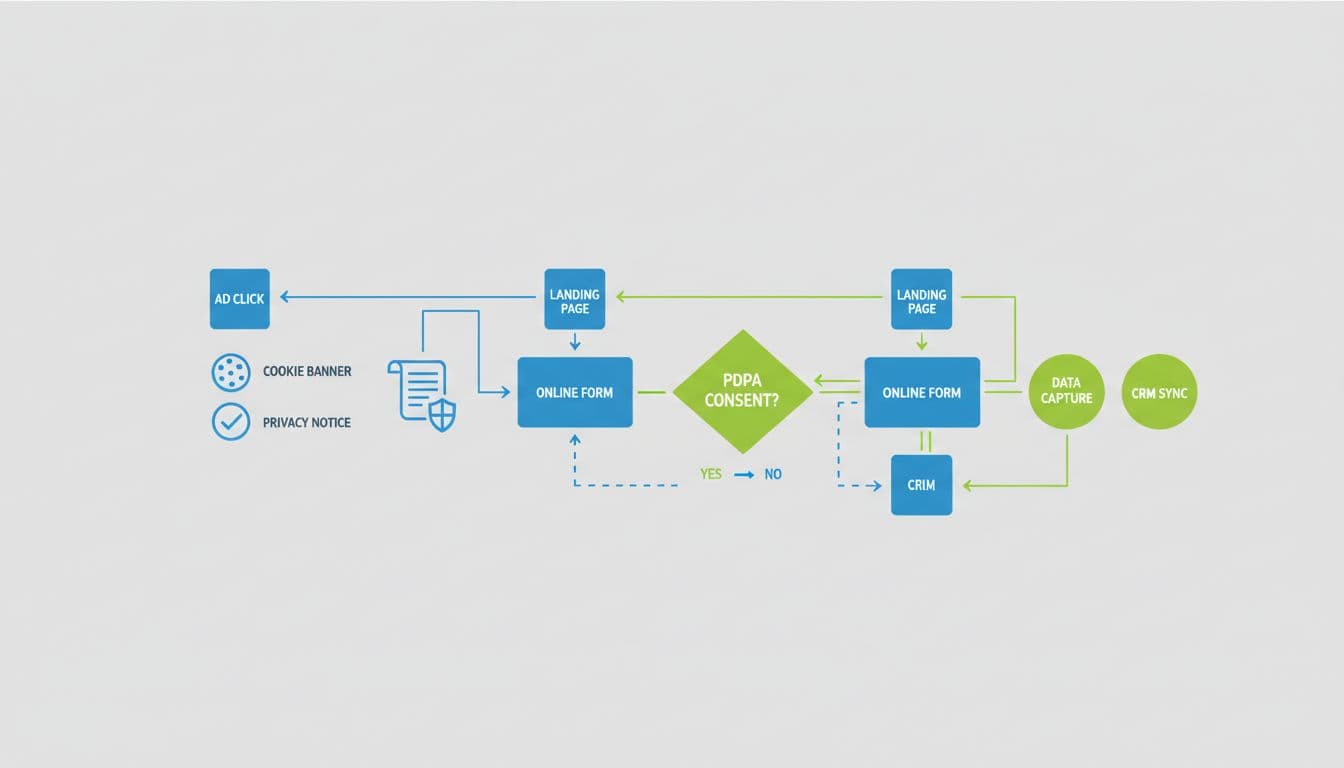
For a useful transfer-focused read, Thailand PDPA Third-Party Due Diligence 2026 Explained gives a practical view of vendor checks and contract risk. Keep the official PDPC site on your review list, then use a launch checklist before paid media goes live.
If you cannot show where the data goes, who can access it, and how a person can pull back consent, the campaign is not ready. That point applies to B2C promotions and B2B demand generation alike.
Thailand PDPA compliance is less about one banner and more about one connected record of choice. The teams that win in 2026 will be the ones that can prove what the user saw, what the user agreed to, and what every downstream tool did next.
Clean forms help, but proof wins. If your logs cannot tell the full story from click to CRM, fix the system before you scale.


